The Difference Between Being a Writer and Feeling Like One
One word has been showing up in my life over and over and over again lately.
Authenticity.
For those of you who love a good therapist, you’re probably fist-pumping right now.
For the rest of you—hang with me.
I was on a coaching call with a client this week, and she was talking about a handful of people she works with who live unmasked. When they walk into a room, their identity shows up before they ever open their mouths. Their authenticity just oozes out of them. You don’t have to guess who they are. You can feel it.
And if I’m being honest?
Most of us don’t live like that.
Especially not as writers.
Because authenticity is a word that keeps coming up in my conversations and close relationships, I found myself following the breadcrumbs down the rabbit hole.
Why is authenticity so hard for us—not just as humans, but specifically as writers?
Why do so many people become writers… but never quite feel like one?
I could launch into a full psychological analysis here, but I’ll spare us both. Instead, let’s talk about the usual suspects—the quiet, persistent reasons we struggle to show up fully as ourselves on the page.
The Things That Get in the Way
People-pleasing.
Many of us were trained—explicitly or subtly—to prioritize comfort, harmony, and approval. We learned to read the room, manage reactions, and adjust ourselves accordingly. That doesn’t magically disappear when we sit down to write. Instead, it whispers questions like:
Is this too much? Will this offend someone? Should I soften this?
Imposter syndrome.
That gnawing sense that everyone else belongs here… and you somehow snuck in through a side door. Even when you’ve done the work. Even when you have receipts. Even when you’ve published before. The goalpost keeps moving, and the voice keeps saying, Who do you think you are?
Fear.
Of judgment.
Of failure.
Of being misunderstood.
Of being seen too clearly.
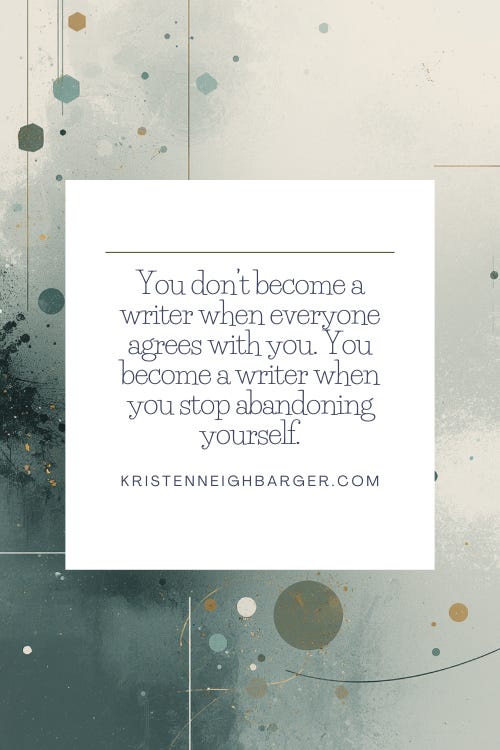
Fear doesn’t usually show up screaming. It shows up as hesitation. Over-editing. Endless drafts. Or silence.
Is anyone else squirming a little?
So What Do We Do With This?
I don’t think there’s a magic formula. But I do think there are a few mindset shifts—paired with actual practice—that help bridge the gap between being a writer and finally feeling like one.
Embrace who you were created to be.
We don’t always give ourselves permission to be individuals. We admire other writers—their voice, their confidence, their cadence—and subtly start reshaping ourselves to fit what we think the role requires. But your difference isn’t a liability. It’s the point. The goal was never to sound like everyone else. The goal was always to sound like you.
Claim your calling.
Your calling wasn’t a misdial. It wasn’t an accidental email sent to the wrong person. It didn’t happen because there was a gap no one else wanted to fill. It was meant for you.
And here’s the hard truth: until you claim it, no amount of validation will make you feel legitimate. You’re not an imposter—you’re just reluctant to own what’s already yours.
Be prepared for criticism.
This is the part we want to skip, but we can’t. You will be misunderstood. You will be critiqued. Sometimes unfairly. Sometimes accurately. Sometimes for doing something well. Fear of judgment is real because it’s familiar—we’ve all been there. But criticism isn’t proof you should quit. It’s proof you showed up.
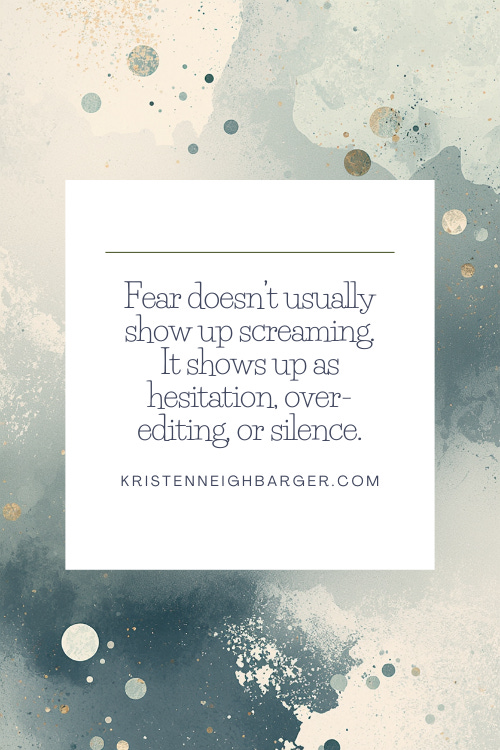
You don’t become a writer when everyone agrees with you.
You become a writer when you stop abandoning yourself.
So let this year be the year you reclaim your voice.
Let it be the year when what you write, publish, and post actually sounds like the truest version of you—not the safest one.
Give yourself permission to show up unmasked.
Because when your identity and authenticity start to ooze out onto the page, your readers won’t just recognize you.
They’ll recognize themselves.
Reflection Questions
If you have a few quiet minutes today, I invite you to sit with one or two of these—no pressure to answer them all.
Where in your writing life do you feel most tempted to edit yourself before anyone else ever sees your words?
When you imagine showing up fully as yourself on the page, what are you most afraid might happen?
Whose approval—or disapproval—still has the loudest voice in your writing process?
In what ways have you been waiting to feel like a writer before allowing yourself to act like one?
What would change if you trusted that your voice is not an accident—but an assignment?
What’s one small way you could show up more honestly in your writing this week?
Are you working on owning your identity as a writer? Over on Amazon, you’ll find several resources I created just for you: The Connected Author and A Yearly Plan with Purpose.
You can check them out here.